
As parents, we’ve all been there: trying to get our little ones to sit still and focus on academics, only to have them squirm and resist. But what if I told you that learning doesn’t have to be a chore? In fact, play-based learning is a powerful tool for cognitive, social, and emotional development in preschoolers. By embracing this approach, you can create a stimulating environment that sparks curiosity and creativity. In this article, we’ll explore the benefits of play-based learning and provide practical tips for parents like you to implement engaging activities and games at home. You’ll learn how to balance structure with freedom, and how to support your child’s natural love of exploration and discovery – all while laying a strong foundation for future success.
The Importance of Play-Based Learning
Play-based learning is more than just fun, it’s a vital part of preschoolers’ cognitive and emotional development. In this next section, we’ll explore why play-based learning matters most for young learners.
Benefits of Play-Based Learning for Preschoolers
Play-based learning is an essential component of preschool education that offers numerous benefits for young children’s cognitive, social, and emotional development. By providing opportunities for exploration and experimentation through play, teachers can foster a love of learning while promoting key skills necessary for future success.
Cognitively, play-based learning encourages critical thinking and problem-solving as children manipulate materials and navigate challenges. A preschooler engaged in building with blocks develops spatial awareness, hand-eye coordination, and fine motor control – essential skills that underpin future academic achievement. Additionally, play-based activities stimulate language development through storytelling and role-playing.
Play also plays a vital role in nurturing social-emotional growth. By engaging in cooperative games or imaginative play scenarios, preschoolers learn to navigate relationships, take turns, and communicate effectively with others. This kind of peer interaction helps develop empathy and builds a sense of belonging within the classroom community. Furthermore, play-based activities help regulate emotions by providing an outlet for pent-up energy and creativity.
When incorporating play into your preschool curriculum, consider setting aside dedicated time each day for open-ended exploration. Offer various materials such as blocks, art supplies, and sensory toys that encourage creative expression while allowing children to make choices and take risks in a supportive environment.
Why Traditional Methods May Not Be Enough
Traditional teaching methods have been around for decades, but they may not be enough to unlock the full potential of preschoolers. These methods often focus on rote memorization and structured learning, which can stifle creativity and curiosity. Children are naturally inclined to explore and learn through play, but traditional methods can limit their freedom to do so.
For instance, a rigid curriculum that emphasizes academic achievement over creative expression can lead to burnout and disengagement in young learners. When children feel forced to conform to strict standards, they may become less likely to take risks or explore new ideas. This is because traditional teaching methods often prioritize obedience over autonomy, creativity over curiosity.
To avoid these pitfalls, educators can incorporate play-based learning into their curricula. By providing a safe and nurturing environment that encourages exploration and experimentation, teachers can help preschoolers develop essential skills like critical thinking, problem-solving, and collaboration.
Understanding the Theories Behind Play-Based Learning
As we explore the world of play-based learning, it’s essential to understand the theories that support its effectiveness. This section delves into the key concepts behind this approach.
Piaget’s Theory: Constructivist Approach
Jean Piaget’s constructivist theory revolutionized our understanding of learning and development. At its core, Piaget believed that children actively construct their own knowledge through experiences and interactions with the environment. This fundamental idea has far-reaching implications for play-based learning.
According to Piaget, young learners are naturally curious and driven to make sense of the world around them. Through play, they experiment with concepts, test hypotheses, and refine their understanding. By embracing this constructivist approach, educators can create an environment that encourages active engagement and hands-on exploration.
To apply Piaget’s theory in a preschool setting, try these strategies: encourage open-ended play activities that allow children to take the lead; provide materials and resources that spark curiosity and creativity; and respect the child’s process, even if it means allowing for mistakes. By doing so, you’ll empower young learners to become active participants in their own educational journey, unlocking a world of possibility and potential. This approach also helps build confidence, resilience, and critical thinking skills – essential qualities for lifelong learning.
Vygotsky’s Theory: Sociocultural Perspective
In the realm of play-based learning, one influential theory is Lev Vygotsky’s sociocultural perspective. This theory posits that children learn and develop through social interactions with more knowledgeable others, such as caregivers, teachers, or peers. According to Vygotsky, learning occurs at the zone of proximal development (ZPD), where a child can perform a task with guidance but not independently.
In play settings, this means that preschoolers benefit from collaborative activities and adult-child interaction. For instance, during block building, an experienced teacher might provide scaffolding by asking open-ended questions or offering hints to help the child solve problems. This approach allows children to navigate complex tasks while receiving support tailored to their needs.
A key aspect of Vygotsky’s theory is that social interactions facilitate cognitive development. When adults engage with preschoolers in play, they model behaviors, language, and problem-solving strategies, promoting internalization of new knowledge and skills. To incorporate this theory into your practice, try co-constructing learning experiences with children, using verbal cues to highlight key concepts, or creating opportunities for peer-to-peer learning. By recognizing the importance of social interaction in play, you can create a more effective and engaging preschool environment.
Setting Up a Play-Based Learning Environment
To set up a successful play-based learning environment, you’ll need to create a space that encourages exploration and creativity while meeting your child’s unique needs. This means getting the layout right from the start.
Creating a Safe and Stimulating Space
When it comes to creating an environment that fosters learning through play, setting up a space that encourages exploration and discovery is crucial. A safe and stimulating space not only allows preschoolers to learn at their own pace but also enables them to take risks and experiment without fear of consequences.
To create such an environment, start by considering the layout of your play area. Make sure there’s enough space for children to move around comfortably and engage in various activities simultaneously. Divide the space into different zones or areas that cater to different interests and needs, such as a reading nook, art station, building area, and gross motor zone.
Incorporate natural elements like plants, windows, and outdoor views to bring in a sense of calm and wonder. Use furniture and materials that are durable and easy to clean, but also visually appealing and inviting. Think about including cozy corners with pillows, rugs, and soft lighting to create snug and intimate spaces for quiet activities.
Remember, the goal is to encourage children to explore, experiment, and learn through play. By designing an environment that supports their natural curiosity and creativity, you’ll be providing a foundation for lifelong learning and discovery.
Incorporating Different Types of Toys and Materials
Incorporating different types of toys and materials is essential to foster creativity and curiosity in preschoolers. A well-stocked play-based learning environment should include a variety of toys that cater to different learning styles and interests.
Blocks, for instance, are perfect for developing fine motor skills, hand-eye coordination, and problem-solving abilities. Consider incorporating wooden blocks, LEGO DUPLO blocks, or magnetic tiles to keep things interesting. Puzzles, on the other hand, help improve cognitive function, spatial reasoning, and concentration. You can include simple puzzles with large pieces for younger children and more complex ones as they grow.
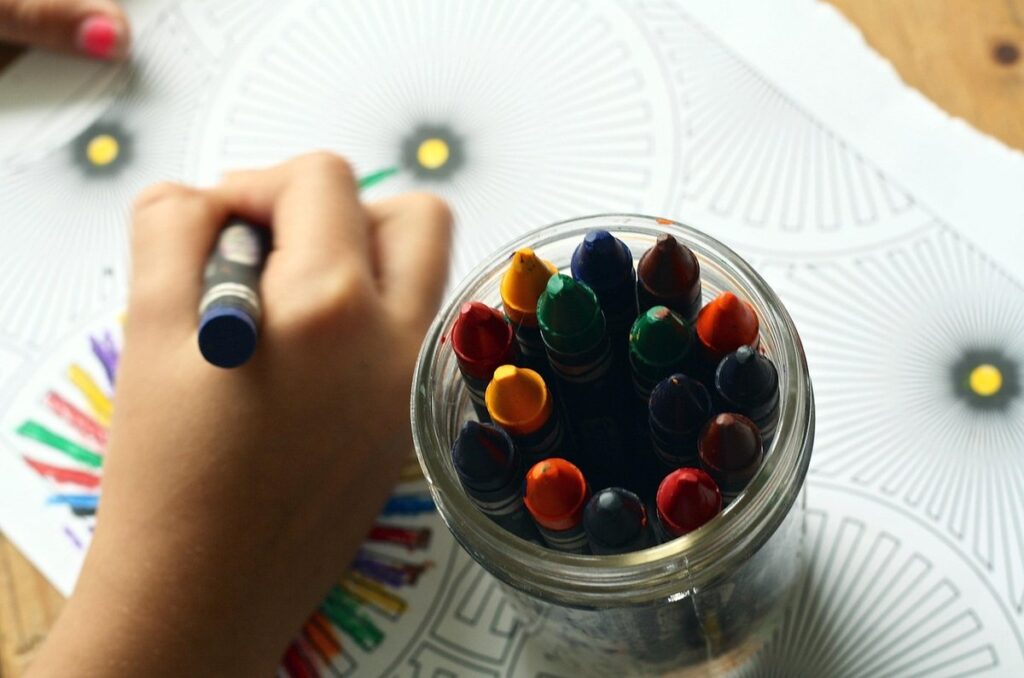
Art supplies are another crucial component of a play-based learning environment. Provide an array of materials like crayons, markers, paints, and colored pencils to encourage self-expression and creativity. Don’t forget to add textured paper, play dough, and other sensory-friendly tools to engage their senses. When choosing toys and materials, remember to rotate them regularly to prevent boredom and keep things fresh. This will help your preschooler stay engaged, motivated, and excited about learning through play.
Implementing Play-Based Activities for Different Subjects
You can bring math, literacy, and science to life by incorporating play-based activities into your lesson plans. This versatility is one of the most exciting aspects of learning through play!
Math Through Play: Counting, Sorting, and Patterns
Math concepts can be a challenging subject for preschoolers to grasp, but incorporating play-based activities into their learning routine can make all the difference. By engaging children in hands-on experiences, you’ll help them develop essential math skills without even realizing it.
For instance, counting can be made fun through games like “What’s Missing?” or “Counting Treasure Hunt.” These games encourage children to identify and count a specific number of objects within a given time frame. To set up this activity, gather a collection of toys or blocks, place some on the table, and ask your child to find a certain number – for example, 5 red blocks. As they search and count, you can reinforce their understanding by asking questions like “How many did you find?” or “Can you show me where the fifth block is?”
Sorting objects into categories is another crucial math concept that can be taught through play. Create a sorting station with various materials such as buttons, beads, or toy blocks in different shapes and colors. Encourage your child to group the items based on shape, color, or size. This activity not only develops their problem-solving skills but also introduces them to basic algebra concepts.
When it comes to patterns, play-based activities offer a fun way for preschoolers to grasp this complex math concept. Try creating a “Pattern Block Station” with large foam blocks in different shapes and colors. Place the blocks in front of your child and ask them to replicate a specific pattern or create their own using only certain block shapes. This game not only introduces children to recognizing patterns but also encourages creativity and critical thinking.
Incorporating these play-based activities into your daily routine can have a lasting impact on your preschooler’s math skills and overall cognitive development. By making learning fun, you’ll set them up for success in the classroom and beyond.
Reading and Writing Through Dramatic Play
Incorporating reading and writing skills into dramatic play is an excellent way to engage preschoolers in learning while fostering their creativity and imagination. During dramatic play, children can take on various roles such as shopkeepers, chefs, or doctors, allowing them to practice essential literacy skills like reading menus, price tags, or medical charts.
For instance, you can create a pretend restaurant scenario where children take turns being the chef, waiter, or customer. The chef can read out the day’s specials from a menu while the waiter practices writing down orders. This activity not only promotes reading and writing but also encourages math skills like counting money for change.
To further enhance this experience, provide authentic props and materials such as real menus, play money, and utensils. You can also create scripted roles with specific literacy tasks to complete during the scenario, such as having a customer order a meal by reading from a list of options or having a waiter write down the order on a notepad.
This interactive approach allows children to develop their literacy skills in a fun and engaging way while reinforcing social skills like cooperation and communication.
Encouraging Parent-Child Interaction Through Play-Based Learning
Now that we’ve explored the benefits of play-based learning, let’s dive into some practical strategies for encouraging parent-child interaction through engaging activities.
Tips for Parents to Engage in Playful Activities with Their Children
As you strive to encourage parent-child interaction through play-based learning at home, it’s essential to be an active participant yourself. Engaging in playful activities with your preschooler is a great way to bond and stimulate their cognitive development. To get started, try setting aside dedicated time each day for unstructured play. This could be as simple as building a fort together using couch cushions or having a dance party to your child’s favorite music.
As you engage in play, remember to observe and follow your child’s lead. Allow them to take the reins and guide the activity, while also providing gentle suggestions and prompts when needed. For instance, if your child starts stacking blocks, you could ask open-ended questions like “What do you think will happen if we add another block on top?” or “Can you show me how you’re balancing it?”
By being present and participating in play-based learning activities, you’ll not only strengthen your relationship with your child but also foster a love for lifelong learning. So, have fun and be creative – the possibilities are endless!
Building Stronger Relationships through Shared Experiences
Building strong relationships with our children is essential for their emotional development and well-being. One of the most effective ways to foster these bonds is through shared experiences. When we engage in play alongside our preschoolers, we create a sense of unity and connection that can’t be replicated in other settings.
Shared play allows us to see the world from our child’s perspective, fostering empathy and understanding. It also enables us to model social skills, such as communication, cooperation, and problem-solving, in a fun and interactive way. For instance, if you’re playing with blocks together, your child can learn about spatial reasoning while developing fine motor skills. You can even take it a step further by asking open-ended questions, like “What do you think will happen if we add another block?” or “How do you think we can make this castle taller?”
This approach not only strengthens our relationships with our children but also encourages them to explore and learn at their own pace. By making learning an enjoyable experience through shared play, we set the stage for a lifelong love of discovery and exploration.
Addressing Common Concerns and Misconceptions
Many parents have questions and concerns when it comes to learning through play, so let’s tackle some of these common misconceptions head-on. We’ll address your most pressing doubts about this approach.
Debunking Myths About Play-Based Learning
Many parents and educators have misconceptions about play-based learning, believing it’s simply letting children play without structure or purpose. However, research shows that high-quality play is essential for young children’s cognitive, social-emotional, and physical development.
One common myth is that play-based learning is a waste of time, that children should be focused on academics from the start. But this approach can actually hinder their ability to learn in the long run. Studies have shown that children who engage in high-quality play are better prepared for formal schooling and have an advantage over their peers when it comes to reading and math skills.
Another misconception is that play-based learning is unstructured and chaotic, lacking direction or adult guidance. While it’s true that play-based learning often looks different from traditional classroom instruction, it’s not without its structure or organization. In fact, a well-planned play-based program can be just as intentional and deliberate as a more structured approach.
In reality, high-quality play is highly engaging, interactive, and responsive to children’s interests and needs. It allows them to explore, experiment, and express themselves in a safe and supportive environment. By providing open-ended materials and challenges, educators can encourage critical thinking, problem-solving, and creativity – essential skills for lifelong learning.
To implement a successful play-based program, parents and educators should focus on creating an inviting, inclusive space that encourages children to take risks and explore their interests. This might involve setting up various stations or areas of interest, providing a variety of materials and tools, and engaging with children in the play process itself. By doing so, they can help young learners develop essential skills, build confidence, and unlock their full potential.
Conclusion: Empowering Preschoolers Through Play-Based Learning
As we come full circle, let’s discuss how play-based learning empowers preschoolers to take ownership of their knowledge and become lifelong learners. This empowering approach sets a strong foundation for future academic success.
Recap of Key Points
In conclusion, we’ve explored the power of play-based learning for preschoolers and its impact on their cognitive, social-emotional, and physical development. By embracing this approach, educators can create engaging and interactive environments that foster a love for learning.
To recap, our key takeaways include:
* The importance of providing open-ended materials and spaces that encourage exploration and creativity
* The value of observing and responding to children’s interests and passions, rather than imposing structured lessons
* Strategies for incorporating play-based learning into daily routines, such as morning meeting activities and outdoor explorations
We’ve also discussed the benefits of role-playing, imaginative play, and sensory experiences in developing social-emotional skills and promoting critical thinking. By prioritizing play-based learning, educators can empower preschoolers to take ownership of their learning journey, build resilience, and develop a growth mindset.
As you incorporate these strategies into your teaching practices, remember to be patient and flexible – every child is unique, and what works for one may not work for another. By embracing the power of play, we can unlock preschoolers’ potential and set them up for lifelong learning success.
Final Thoughts on the Importance of Play-Based Learning
As we conclude our exploration of play-based learning for preschoolers, it’s essential to reflect on its significance. Play is not just a means to an end; it is the end itself – a vital component of a child’s growth and development. By embracing play as a primary teaching method, we empower young learners with the skills, confidence, and creativity they need to succeed in life.
Incorporating play into daily routines can be as simple as setting aside dedicated time for unstructured play or weaving it into existing lesson plans. For instance, a math lesson might involve counting blocks while building a tower or measuring ingredients while baking cookies. The possibilities are endless, and the benefits are undeniable – improved problem-solving skills, enhanced social abilities, and a lifelong love of learning.
As you continue to nurture your preschoolers through play-based learning, remember that every moment is an opportunity for growth. So, don’t be afraid to let them take the lead, explore their interests, and make mistakes. With patience, consistency, and a willingness to adapt, you’ll unlock the full potential within each child, setting them up for success in all aspects of life.
Frequently Asked Questions
How do I balance structured activities with free play in a play-based learning environment?
Balancing structure and freedom is key to creating an engaging play-based learning environment. Start by setting clear expectations for your child’s daily schedule, including dedicated time for focused play. Then, observe their interests and preferences to inform your planning. Offer choices within reason, allowing them to explore different activities while still maintaining a general framework.
What types of toys and materials are best suited for play-based learning?
For effective play-based learning, incorporate a variety of toys and materials that encourage exploration and imagination. Include building blocks, puzzles, art supplies, dress-up clothes, and open-ended games like Legos or magnetic tiles. Avoid overly structured or electronic items that can stifle creativity.
How do I engage my child in math through play when they resist traditional counting exercises?
Many children struggle with traditional math exercises but enjoy playing games and solving problems intuitively. Engage your child in activities that involve counting, sorting, and patterns naturally, such as cooking, gardening, or puzzles. You can also use everyday objects to demonstrate mathematical concepts, making learning feel more relevant and fun.
What if my child is struggling with reading and writing skills due to limited exposure?
Children develop reading and writing skills through a combination of explicit instruction and opportunities for practice in real-life situations. Engage your child in storytelling through dramatic play, reading together, or creating their own stories and illustrating them. These activities can help build confidence and fluency.
Can I use digital tools alongside traditional play-based learning methods?
While technology has its place in education, excessive screen time can hinder the benefits of play-based learning. Integrate digital tools thoughtfully to enhance specific skills or make certain tasks more accessible. For example, you can use apps for reading practice or math games but ensure these are used as supplements rather than replacements for hands-on activities.