
As a parent or caregiver, you’re probably familiar with the struggle to keep your little ones engaged and active. But did you know that fine motor skills are just as crucial for their development as physical activity is? These essential skills allow kids to hold pencils, button shirts, and even tie their shoelaces independently. If your child struggles with dexterity or coordination, don’t worry – it’s never too early (or late!) to work on building these skills. In this article, we’ll share a variety of fun and interactive fine motor skill activities suitable for preschoolers through elementary school students. From arts and crafts projects to games that challenge hand-eye coordination, we’ve got you covered with engaging ideas to boost your child’s dexterity and confidence in no time!
Understanding Fine Motor Skills
When it comes to fine motor skills, do you know what they are and why they’re essential for your child’s development? This section will break down the basics of fine motor skills.
What are Fine Motor Skills?
Fine motor skills refer to the small muscle movements that enable us to perform everyday tasks. These skills are essential for daily life and involve manipulating objects with precision, such as buttoning a shirt, tying shoelaces, holding a pencil or crayon, using scissors, and even typing on a keyboard.
Activities like drawing, coloring, puzzles, and playing musical instruments require fine motor skills. Even simple actions like feeding oneself, brushing teeth, or zipping up pants rely heavily on these abilities. In children, developing fine motor skills is crucial for learning to write, use utensils, and engage in various creative pursuits.
To better understand the importance of fine motor skills, consider a child struggling with writing due to weak hand muscles. They may have trouble holding their pencil correctly, leading to frustration and delayed progress in reading and writing development. By incorporating activities that promote fine motor skills into your child’s daily routine, you can help them develop essential abilities for future success.
Importance of Fine Motor Skills in Child Development
Developing fine motor skills is crucial for a child’s overall growth and development. These skills enable children to manipulate objects with precision, which has a direct impact on their cognitive, emotional, and physical abilities. For instance, when children learn to use scissors or draw shapes, they are not only refining their hand-eye coordination but also building problem-solving skills.
As fine motor skills improve, children’s ability to express themselves creatively through art, music, and writing enhances significantly. This, in turn, fosters confidence and self-esteem. On the physical front, good fine motor control helps with basic tasks like dressing and feeding, promoting independence from an early age.
Moreover, research suggests that a strong foundation in fine motor skills can have lasting effects on academic performance and future career prospects. For example, children who excel in writing and drawing tend to do better in reading comprehension and math problems due to improved hand-eye coordination and spatial awareness. By incorporating fine motor skill-building activities into your child’s daily routine, you’re setting them up for success in all areas of development.
Fun Fine Motor Activities for Preschoolers (Ages 3-5)
Let’s have some fun while developing those tiny hands and fingers with engaging activities that are perfect for preschoolers aged 3 to 5 years old. Play-based learning is key!
Finger Painting and Coloring
Finger painting and coloring are excellent ways to engage preschoolers in fine motor skill development while fostering their creativity. For finger painting, set up a space with a large sheet of paper or canvas on an easel or table. Make sure the area is protected from spills with a plastic tablecloth or smock. Use washable paint and provide various brushes, sponges, and materials for kids to experiment.
For coloring, prepare a selection of colorful sheets, crayons, markers, and colored pencils. Encourage children to use their fingers to create patterns, textures, and designs. To enhance dexterity, try activities like finger painting with different materials, such as glitter, sequins, or even stickers. You can also set up a “painting station” with multiple colors and tools for kids to rotate through.
Tips for setting up a safe space include covering the floor with paper or a plastic tablecloth, using washable materials, and providing smocks or old shirts for kids to wear. Encourage experimentation and exploration while minimizing messes by having supplies ready at hand and being prepared to clean up spills promptly.
Playdough Creations
Playdough is an excellent medium to engage preschoolers (ages 3-5) in fun fine motor activities that promote dexterity and coordination. Making homemade playdough is a cost-effective and easy way to create this tactile delight. Mix together 2 cups of flour, 1/2 cup of water, 1/4 cup of salt, and 2 tablespoons of vegetable oil for a classic recipe. You can also add drops of food coloring to make it more engaging.
The benefits of playdough for fine motor development are numerous. By manipulating the dough with their hands, children improve their hand-eye coordination, finger dexterity, and overall manual dexterity. They learn to manipulate small objects, which is essential for future academic success in math, science, and art. To enhance this activity, you can suggest playdough creations such as rolling out snakes, making shapes, or even creating 3D objects like balls or animals.
Some ideas for playdough creations include making patterns with different textures, creating roads with a toy car, or building a structure using cookie cutters. You can also incorporate other materials like beads, sequins, or glitter to add an extra layer of fun and challenge. By encouraging children to experiment with playdough, you’re not only developing their fine motor skills but also nurturing their creativity and imagination.
Fine Motor Activities for Early Learners (Ages 5-7)
As you work with early learners, it’s essential to introduce fine motor activities that cater to their age-specific needs and abilities. This section shares engaging ideas suitable for children aged 5-7.
Puzzles and Shape Sorters
Puzzles and shape sorters are an excellent way to challenge early learners and improve their fine motor skills. These activities help develop hand-eye coordination, dexterity, and problem-solving abilities, all essential for mastering more complex tasks.
You can start with simple puzzles that have large pieces, such as a 6-piece puzzle, and gradually move on to more complex ones with smaller pieces. Look for puzzles that feature your child’s favorite characters or themes to make them more engaging. For example, you can try puzzles from popular children’s books like “Where’s Waldo?” or “The Very Hungry Caterpillar.”
Shape sorters are another great option for early learners. These toys come in various shapes and sizes, and they help children develop their problem-solving skills by identifying which shape fits into a specific slot. You can also use everyday objects like cups, blocks, or shapes made from foam to create your own shape sorter.
When introducing puzzles and shape sorters, be sure to provide guidance but also allow your child to explore and learn independently. Encourage them to try different approaches and celebrate their successes, no matter how small.
Bead and Buttoning Activities
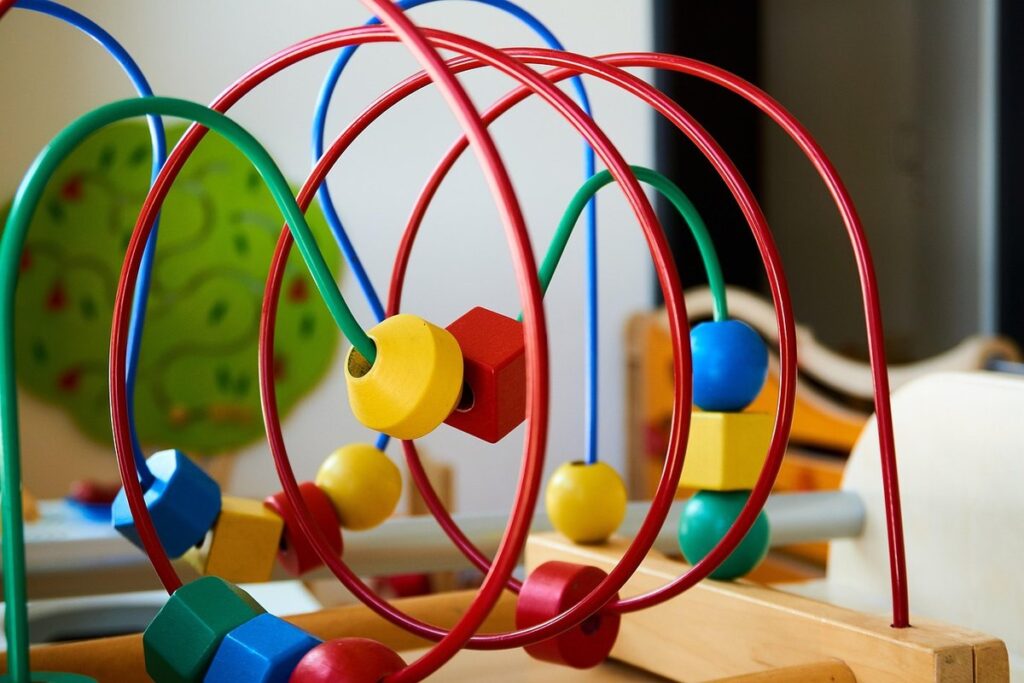
Bead and buttoning activities are excellent ways to challenge young children’s fine motor skills while making it fun for them. These simple tasks may seem mundane to adults, but they provide a wealth of benefits for early learners. For instance, beading helps improve hand-eye coordination as children learn to thread small beads onto strings or wires. This activity also enhances finger dexterity and pincer grip strength.
Adapting bead and buttoning activities for your young learner can be easy. Start with large beads or buttons that are easier to handle, then gradually move on to smaller ones as their skills improve. To make it more engaging, use a variety of materials like different colored strings, wires, or even small toys to decorate.
Tips for adapting bead and buttoning activities include:
• Using assistive tools such as tweezers or tongs to help children pick up beads or buttons
• Practicing beading or buttoning with both hands to improve bilateral coordination
• Encouraging children to experiment with different patterns and designs, promoting creativity and problem-solving skills
Fine Motor Games for Elementary School Students (Ages 8-10)
For kids aged 8-10, we’ve got a range of fun and engaging fine motor games that will challenge their dexterity and coordination in no time! These activities are perfect for classroom or home play.
Tactile Games like Jigsaw Puzzles and Mosaic Art
Tactile games like jigsaw puzzles and mosaic art are an excellent way to develop fine motor skills in elementary school students. These activities not only provide a fun and engaging way for children to exercise their hands but also challenge their problem-solving skills.
Jigsaw puzzles, in particular, offer a great way to improve hand-eye coordination, visual-spatial skills, and even cognitive development. Start with simple puzzles that have larger pieces and gradually move on to more complex ones as your child’s fine motor skills develop. You can also try 3D puzzles or shape-sorting games for an added challenge.
Mosaic art is another engaging tactile activity that requires precision and patience. Use pre-made mosaic kits or create your own designs using tiles, beads, or even colored paper. Encourage your child to experiment with different patterns and colors, teaching them about symmetry and creativity along the way. For example, try making a simple mosaic picture frame together as a fun bonding experience.
By incorporating these tactile games into your daily routine, you’ll be giving your child’s fine motor skills a boost while fostering their creativity and problem-solving abilities.
Finger Spelling and Typing Activities
Incorporating finger spelling and typing activities into your daily routine can significantly improve fine motor skills in elementary school students. Finger spelling is a valuable tool for building dexterity, as it requires the precise movement of individual fingers to form letters. By practicing finger spelling exercises, children develop hand-eye coordination, finger independence, and the ability to manipulate small objects.
To incorporate finger spelling into your classroom or home routine, start with simple exercises such as finger tracing, where students spell out their name or common words using their index fingers. You can also use flashcards with letters on them, requiring students to spell out the word by touching each letter with a specific finger. For typing activities, begin with short sentences and gradually increase complexity.
Tips for effective implementation include making it fun by incorporating games like “Finger Spell-a-Thon” where students compete in spelling accuracy. Provide regular feedback to encourage improvement and use technology to access interactive typing programs that adapt to the student’s skill level.
Fine Motor Challenges for Older Children (Ages 11-13)
As your child reaches pre-teen years, fine motor challenges can arise due to rapid growth spurts and developmental changes, making it essential to engage them in activities that enhance dexterity. This section offers practical tips and exercises tailored for 11-13 year olds.
Advanced Puzzles and Brain Teasers
As children enter their pre-teen years, their fine motor skills and problem-solving abilities continue to develop rapidly. Advanced puzzles and brain teasers are an excellent way to challenge and engage older kids (ages 11-13), promoting cognitive growth and refining their dexterity.
There’s a wide range of puzzles that cater to different skill levels and interests. For instance, you can try 3D jigsaw puzzles with intricate designs or sliding puzzles that require spatial reasoning and fine motor control. Another option is brain teasers like the “Rubik’s Cube” or “Sliding Puzzles,” which not only challenge problem-solving skills but also improve hand-eye coordination.
To incorporate these activities into your child’s routine, start by introducing simpler puzzles and gradually increase the difficulty level as they progress. Be patient and encourage them to think critically about each puzzle, exploring different solutions before settling on one. By making fine motor challenges a part of their daily lives, you’ll help develop problem-solving skills, hand-eye coordination, and cognitive flexibility that will benefit them for years to come.
To maximize the effectiveness of these activities, try pairing puzzles with other fine motor exercises like drawing, coloring, or playing musical instruments. This multi-sensory approach will enhance overall dexterity and create a more comprehensive learning experience.
DIY Crafts with Small Materials
Engaging older children (ages 11-13) in DIY crafts that utilize small materials is an excellent way to develop their fine motor skills. Activities such as beading, button-making, and working with threads offer a range of benefits for developing dexterity and coordination.
Beads are an ideal material for this age group, as they come in various shapes, sizes, and textures. Children can thread beads onto strings or create intricate designs using bead-weaving techniques. This process enhances finger dexterity, hand-eye coordination, and problem-solving skills.
To adapt beading activities for different skill levels, start with simpler tasks such as threading a single color string or counting beads. Gradually increase the complexity by introducing multiple colors, patterns, or larger beads. For more advanced children, consider incorporating bead-weaving techniques or creating three-dimensional designs using multiple strings.
When working with buttons, try designing button collars or other decorative accessories. This activity improves finger strength and dexterity while allowing children to express their creativity through color and pattern combinations.
Creating a Fine Motor-Friendly Environment
To create a fine motor-friendly environment, consider setting up designated play areas and investing in tools that promote small-motor development, such as fidget toys.
Setting Up a Safe Workspace
Setting up a safe workspace is crucial when it comes to fine motor activities for children. This will not only prevent injuries but also encourage them to focus and have fun while developing their dexterity and coordination. To start, designate an area that’s free from distractions such as TVs, phones, or other electronic devices. Consider setting up a quiet corner in the playroom or even a specific zone on the kitchen table.
When organizing materials, prioritize accessibility and visibility. Store frequently used items within easy reach to avoid unnecessary stretching or bending. Use baskets or containers with labels to keep similar supplies organized and categorize them by type (e.g., scissors, crayons, glue). Make sure there’s enough space between activities for children to move around comfortably.
To minimize distractions, limit the number of toys and materials present at one time. This will prevent overstimulation and encourage children to focus on a single task. Consider setting up a “fine motor station” with essential supplies like scissors, crayons, and paper. By establishing a safe and organized workspace, you’ll create an environment that’s conducive to learning and creativity.
Encouraging Parental Involvement
Involving parents in their child’s fine motor development journey has numerous benefits for both parties. Not only does it strengthen the parent-child bond, but it also provides valuable opportunities for children to learn and practice new skills in a fun and engaging way. By participating in fine motor activities together, parents can gain insight into their child’s strengths, weaknesses, and learning style, allowing them to better support and guide their development.
Some ideas for parent-child activities that promote fine motor skills include playdough creations, puzzles, coloring books, and finger painting. These activities not only foster creativity but also require children to use small muscles in their hands and fingers to manipulate objects. For instance, playing with playdough can help improve pincer grasp and hand-eye coordination, while coloring and painting can enhance finger dexterity and fine motor precision.
To encourage parental involvement, consider setting aside dedicated time each day or week for joint activities. This could be as simple as making cookies together, doing a puzzle, or even just playing with playdough. By making these activities a regular part of your routine, you’ll not only enhance your child’s fine motor skills but also create lasting memories and strengthen your relationship.
Conclusion: Fostering Lifelong Fine Motor Skills
In conclusion, fostering lifelong fine motor skills is essential for children’s overall development and future success. As we’ve explored various activities throughout this post, it’s evident that making fine motor skills a priority from an early age can have a lasting impact. To reinforce the importance of these skills, make them a fun and engaging part of your child’s daily routine. Consider incorporating activities like playdough creations, puzzles, or finger painting into your daily schedule to keep their hands active and engaged.
As children grow older, fine motor skills will continue to evolve and become more refined. By making them a consistent focus in the early years, you’ll set your child up for success in academics and beyond. So, don’t underestimate the power of a simple activity like coloring or tying shoelaces – these everyday tasks are essential building blocks for lifelong fine motor skills.
Frequently Asked Questions
What if my child struggles with a specific fine motor activity, but shows improvement in others?
If your child is having trouble with a particular activity, don’t worry! It’s common for children to develop skills at different rates. Try breaking down the activity into smaller steps and focusing on building one or two specific skills at a time. For example, if they’re struggling with tying shoelaces, start by practicing just making loops with the laces before moving on to actually tying them.
Can I adapt fine motor activities for children with special needs or disabilities?
Absolutely! Fine motor activities can be adapted to suit children of all abilities. Consult with an occupational therapist (OT) to determine which modifications are best suited for your child’s specific needs. For example, if they have limited hand mobility, use larger objects or tools that require less dexterity. This will help keep them engaged and build their confidence.
How often should I practice fine motor activities with my child?
Consistency is key when it comes to building fine motor skills. Aim to practice these activities 2-3 times a week for 10-15 minutes at a time. You can incorporate them into your daily routine, such as during breakfast or before bed. This will help prevent fatigue and keep your child engaged.
What are some ways to make fine motor activities more challenging as my child gets older?
As children grow and develop, their fine motor skills should also become more refined. To challenge them further, try introducing new materials or tools that require more precision and dexterity. For example, if they’re proficient with crayons, move on to using a pencil or even a pen. You can also increase the difficulty level of puzzles or games.
Can I use technology to support fine motor activities for my child?
Yes! There are many digital tools and apps available that can help support fine motor development. For example, you can find virtual “tactile” games that mimic the experience of playing with playdough or sand. Some educational apps also offer interactive fine motor exercises that can be tailored to your child’s age and skill level. Be sure to choose apps that are both fun and engaging for your child.