
Are you tired of wondering how to keep your little ones engaged in learning when school is out? As a parent or caregiver, you know that providing a stimulating environment at home is crucial for their cognitive and emotional development. But with so many different ages and stages, it can be overwhelming to figure out what works best for each child. That’s why we’ve put together this comprehensive guide to educational activities tailored specifically by age. From the sensory exploration of early childhood to project-based learning for school-age kids and pre-teens, our guide covers it all. Whether you’re looking to boost language development or foster creativity, we’ll walk you through a range of fun and effective ideas to keep your children engaged and learning at home.
Early Childhood (0-3 years): Play-based Learning
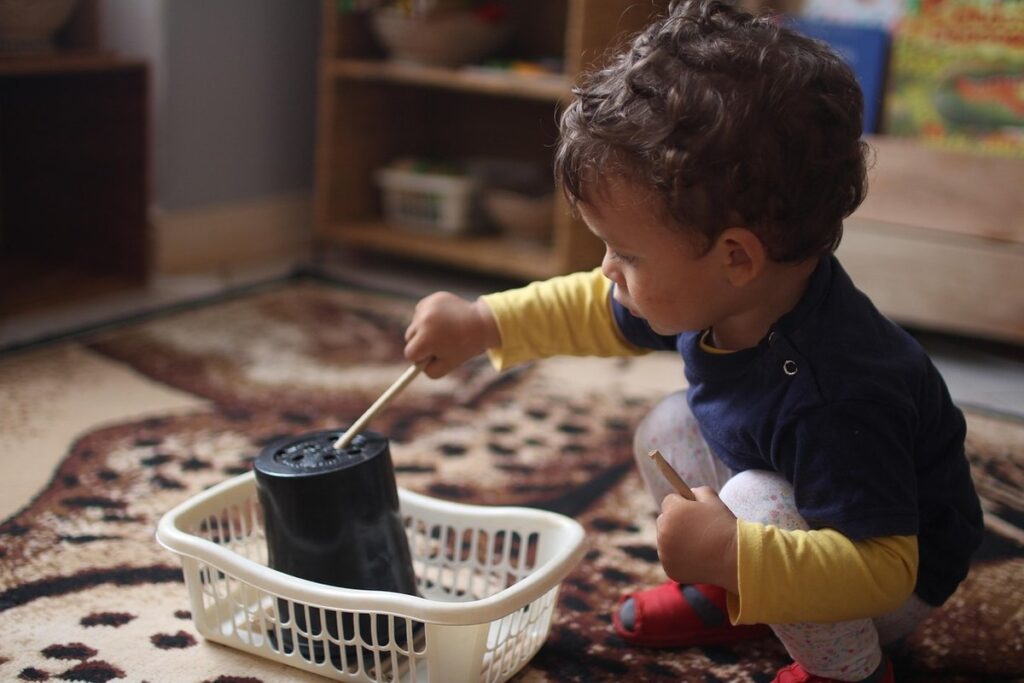
For little ones aged 0-3, play-based learning is a fantastic way to encourage exploration and curiosity, setting the stage for future academic success. This section shares engaging activities tailored to their unique developmental needs.
Sensory Exploration and Development
As you engage your little one in sensory exploration and development activities, remember that this is a critical period for cognitive, motor, and language skills growth. For infants (0-12 months), texture exploration is a great way to stimulate their senses. Offer a variety of textures like soft fabrics, rough sandpaper, or squishy balls for them to touch and explore with their hands.
For toddlers (1-3 years), taste testing becomes an excellent opportunity to introduce new flavors and encourage language development through descriptive words. Set up a simple snack station with fruits, vegetables, and crackers, and ask your child to describe the tastes, textures, and colors they encounter.
Music sessions are also essential for infants and toddlers alike. Sing songs, play instruments, or create homemade music makers like shakers filled with rice or beans. This not only exposes them to rhythm but also aids in language development through musical phrases and rhymes.
Fine Motor Skills and Hand-eye Coordination
Fine motor skills and hand-eye coordination are essential for young children to develop as they learn to navigate their surroundings. Between 0-3 years, you can engage your little one with activities that promote fine motor control, dexterity, and hand-eye coordination.
Finger painting is a great way to encourage creativity while developing fine motor skills. Set up a space where your child can paint without making a mess, use washable paints, and let them explore different colors and textures. You can also try using playdough, which helps improve finger strength and dexterity as they manipulate the dough.
Stacking toys, such as cups or blocks, are another excellent way to develop hand-eye coordination. Start with small objects and gradually increase their size as your child’s skills progress. This activity will help them learn problem-solving skills and spatial awareness.
Make playtime a learning experience by providing a variety of activities that challenge your child’s fine motor skills and hand-eye coordination.
Language Development through Storytelling
Storytelling is an essential tool for language development in early childhood. When you engage with your child through storytelling, you’re providing a rich source of vocabulary, syntax, and narrative structure. Reading aloud to your child is a great place to start. Choose books with simple, engaging storylines and colorful illustrations that encourage interaction.
As you read together, ask open-ended questions like “What do you think will happen next?” or “Why do you think the character made that choice?” This not only stimulates their curiosity but also helps develop critical thinking skills. Don’t be afraid to make up stories together! Take turns adding sentences or paragraphs to create a unique narrative.
Encourage your child’s language development by encouraging them to narrate their own experiences. For example, ask them to tell you about their day at the park, focusing on specific details like what game they played and with whom. This helps build confidence in their communication skills while providing valuable insight into their daily life.
Preschool Age (3-5 years): Structured Learning Activities
For children aged 3-5, it’s essential to introduce structured learning activities that foster independence and lay a strong foundation for future academic success. Let’s explore engaging ways to do so at home.
Alphabet Recognition and Phonics
At this age, introducing structured activities to recognize and understand the alphabet can lay a strong foundation for future reading skills. Begin by teaching the sounds associated with each letter, making use of flashcards to reinforce their visual connection.
Developing phonetic awareness is just as important, and one simple yet effective way to do so is through rhyming games. Read books or recite nursery rhymes that focus on word families (e.g., cat/hat/mat). These activities not only help children grasp the sounds of words but also foster an appreciation for language and its musicality.
For alphabet recognition, try using everyday objects as flashcards to associate letters with real-world examples. For example, show your child a picture of a “b” made from a block or a toy bus to connect the letter with its sound.
Word-building exercises can be made fun by using magnetic letters or foam blocks and creating simple words like “cat” or “dog.” This hands-on approach not only reinforces alphabet recognition but also encourages experimentation with new sounds.
Number Sense and Basic Math Concepts
When it comes to introducing preschoolers to number sense and basic math concepts at home, it’s essential to make learning fun and engaging. You can start by incorporating games and activities that promote counting, basic addition, and subtraction.
One way to encourage number recognition is by using everyday objects as counting tools. For example, you can use a jar of buttons or blocks and have your child count them with you. This activity not only helps develop their one-to-one correspondence skills but also builds their fine motor skills through manipulation of the objects.
To take it to the next level, try introducing basic addition and subtraction concepts using real-life scenarios. For instance, if you’re baking cookies together, ask your child how many cookies they think you’ll have after adding 3 more to the tray. Or, if you’re cleaning up toys, ask them how many toys will be left after taking away 2.
Remember, the key is to keep it simple and make it fun! Use songs, rhymes, and games like “What’s Missing?” or “Number Bingo” to reinforce these concepts. With consistent practice and positive reinforcement, your child will develop a strong foundation in number sense and basic math concepts that will serve them well as they progress through school.
Science Experiments for Preschoolers
As preschoolers are naturally curious, introducing simple science experiments at home can foster their love for learning and exploration. Start by setting up a safe and engaging space where they can conduct experiments without worrying about messes or breakages.
For 3-5 year olds, focus on hands-on activities that encourage observation, prediction, and creativity. For example, try the ‘Dancing Raisins Experiment’: fill a glass with soda, add raisins, and watch as they react to the carbonation. This fun experiment introduces concepts like buoyancy and density in an easy-to-understand way.
Other engaging experiments for preschoolers include:
• Making slime using glue, water, and borax
• Creating a homemade volcano using baking soda and vinegar
• Planting seeds and observing their growth
• Exploring the five senses through sensory bins filled with rice, beans, or sand
Remember to keep it simple, safe, and fun! Encourage your child’s curiosity by asking open-ended questions like ‘What do you think will happen if…’ or ‘Why do you think that is?’. By doing so, you’ll help them develop their scientific thinking skills and lay a solid foundation for future learning.
School-age Children (6-10 years): Project-based Learning
For kids aged 6-10, project-based learning is a great way to encourage hands-on exploration and creativity while developing essential skills like problem-solving and critical thinking. Let’s dive into some fun project ideas!
Encouraging Curiosity through Open-ended Projects
Encouraging curiosity is essential for school-age children as they begin to develop their problem-solving skills and interests. One effective way to foster this curiosity is by providing them with open-ended projects that allow them to explore, create, and think critically.
When assigning these types of projects, it’s crucial to give your child the freedom to choose their own topic or path. This could be anything from building a bridge using everyday materials to creating a time capsule for future generations. The goal is to encourage creativity and exploration without imposing specific guidelines or outcomes.
To get started, try presenting your child with a broad question or prompt that sparks their interest. For instance, “Design a futuristic city” or “Create a system to conserve water.” As they work on the project, ask open-ended questions to guide them, such as “What do you think would be the most significant challenge in building this city?” or “How would your system benefit the environment?”
By giving children the autonomy to explore and create, we allow them to develop their critical thinking skills while fostering a love of learning.
STEM Activities for Developing Problem-solving Skills
As a parent or caregiver, you’re likely aware of the importance of nurturing problem-solving skills in school-age children. These skills are essential for their academic success and future career prospects. Engaging them in STEM-related activities is an excellent way to challenge their minds and foster creative thinking.
Consider introducing robotics as a fun and interactive way to develop problem-solving skills. You can start with simple kits like Lego Mindstorms or Dash robots, which allow children to build and program their own machines. This hands-on approach encourages experimentation, trial-and-error learning, and critical thinking.
Coding is another valuable STEM activity that can be adapted for school-age children. Introduce basic programming concepts using block-based coding languages like Scratch or Blockly. These platforms provide a gentle learning curve, allowing kids to create simple games, animations, or interactive stories.
Engineering challenges are also an excellent way to encourage problem-solving skills in your child. Set up a maker space at home with building materials and tools, such as cardboard boxes, straws, tape, and scissors. Provide open-ended prompts like “Design a bridge that can hold a certain amount of weight” or “Create a marble run using everyday objects.” This type of project-based learning encourages creativity, resourcefulness, and critical thinking.
Remember to guide your child through the process, but also give them space to explore and experiment on their own. Encourage them to ask questions, think critically, and learn from their mistakes. With consistent practice and exposure to STEM activities, your child will develop a strong foundation in problem-solving skills, preparing them for future academic and professional challenges.
History and Cultural Studies through Real-world Applications
Project-based learning offers an engaging way for 6-10 year olds to explore historical and cultural studies through real-world applications. By incorporating role-playing, debates, and hands-on craft projects, children can develop a deeper understanding of the past and its relevance to modern life.
For example, your child can participate in a simulated ancient civilization by creating their own pottery or weaving looms. This tactile approach allows them to connect with the artifacts and understand the daily lives of people from different eras. Alternatively, you can engage them in debates on historical events, encouraging critical thinking and public speaking skills.
Hands-on craft projects are another effective way to teach cultural studies. Have your child create traditional clothing or accessories from various cultures, such as African kente cloth or Japanese kimono. This helps them appreciate the significance of these items and their role in shaping identity. As they explore historical and cultural contexts through project-based learning, children develop essential skills in critical thinking, creativity, and empathy.
Pre-Teen (11-13 years): Developing Research Skills
For 11-13 year olds, developing research skills is crucial for future academic success and can be achieved through fun and interactive activities at home. Introduce your child to credible online sources, news articles, and educational databases.
Teaching Critical Thinking and Media Literacy
As your child enters the pre-teen years, it’s essential to equip them with critical thinking and media literacy skills. The internet is vast, and not all information is created equal. With the proliferation of social media, online news sources, and educational websites, pre-teens are exposed to a wide range of content that may or may not be trustworthy.
To teach your child to critically evaluate information sources, start by modeling healthy browsing habits yourself. Discuss the concept of bias in reporting and how it can influence what we read. Use real-life examples like the difference between news outlets with conservative or liberal leanings. Next, involve your child in evaluating online content together. Ask them to identify the source of an article or video, look for credentials of the author, and examine the date of publication.
Use critical thinking exercises to help your child develop effective media literacy skills. For instance, ask them to evaluate a social media post by identifying its purpose (is it meant to persuade, inform, or entertain?) and considering the potential motivations behind it. You can also play online games that teach media literacy, such as fact-checking quizzes or interactive discussions about propaganda techniques.
Encouraging Scientific Inquiry through Investigations
Engaging pre-teens in scientific investigations is an excellent way to foster their curiosity and develop essential research skills. At this age, they’re naturally drawn to hands-on activities that allow them to explore the world around them.
To encourage scientific inquiry, start by identifying areas of interest for your child. Perhaps they love animals or enjoy tinkering with electronics? Use these passions as a starting point for designing experiments that can be conducted at home. For example, you could set up a simple bird feeder experiment where your child measures and records the type of birds visiting the feeder over a set period.
Encourage your child to ask questions and formulate hypotheses based on their observations. This might involve conducting trials, collecting data, and analyzing results. Make sure they understand that it’s okay to make mistakes and that these experiences are essential for learning. By guiding them through the scientific method, you’ll help develop critical thinking skills and a deeper understanding of the world.
Remember to keep things fun and engaging by incorporating hands-on activities and real-world applications. As your child becomes more confident in their ability to design and conduct experiments, encourage them to share their findings with others, whether it’s through a science fair or simply discussing their results with family members.
Building Research Skills through Project-based Learning
As pre-teens begin to explore more complex topics and develop their research skills, project-based learning is an excellent way to foster this growth. By assigning projects that require critical thinking and problem-solving, you’ll help them transition from mere information gathering to thoughtful analysis.
To get started, identify a real-world issue or challenge that sparks their curiosity. This could be anything from climate change to social media’s impact on mental health. Encourage your child to develop research questions related to the topic, which will guide their investigation.
As they begin researching, teach them how to evaluate sources: is it credible? Is the information up-to-date? Can you find multiple sources that confirm or contradict the findings? These skills are essential for identifying reliable information and avoiding misinformation.
When organizing their findings, suggest creating an annotated bibliography or a concept map. This will help them visualize relationships between ideas and synthesize their knowledge into a cohesive narrative. By doing so, your child will not only develop research skills but also think critically about the world around them.
Frequently Asked Questions
Can I adapt these educational activities to suit children with special needs or learning difficulties?
You can! The principles of play-based learning, sensory exploration, and structured learning activities can be adapted to meet the unique needs of children with special needs or learning difficulties. It’s essential to consult with professionals, such as occupational therapists or special education teachers, to develop a tailored approach that suits your child’s individual requirements.
How often should I schedule educational activities at home, considering my child’s daily routine?
Schedule regular educational sessions (2-3 times a week) and incorporate them into your child’s daily routine. Be flexible and adjust the frequency as needed based on your child’s attention span, energy levels, and learning pace. Make sure to include breaks for physical activity, socialization, and relaxation.
What if I’m not a teacher or educator? How can I ensure my educational activities at home are effective?
Don’t worry about being an expert! Effective education at home is more about creating a nurturing environment that fosters curiosity and creativity. Focus on observing your child’s interests, asking open-ended questions, and providing constructive feedback. You can also seek guidance from online resources, educational blogs, or consult with local teachers or experts.
Can I use these activities for children of different ages simultaneously?
While the guide provides age-specific recommendations, you can still adapt certain activities to suit multiple age groups. For example, a family can engage in joint activities like science experiments or cooking projects that cater to various age ranges.
How do I know if my child is progressing or making improvements with these educational activities at home?
Pay attention to your child’s interests, engagement levels, and verbal feedback. Track their progress through regular assessments (e.g., quizzes, tests) and note any significant advancements in cognitive, motor, language, or emotional skills. Celebrate their successes and use them as motivation for continued learning.
Can I reuse or recycle materials from previous activities to save time and resources?
Absolutely! Encourage creativity by repurposing materials or using everyday items creatively. This approach reduces waste, saves time, and promotes innovative thinking – all valuable skills in today’s world.