
Reading to your baby from birth may seem like a simple activity, but its impact on their future is anything but. Research shows that the early years are crucial for language development, cognitive growth, and even social skills. By establishing a daily reading routine, you can set the foundation for a lifelong love of reading in your child. But how exactly do you reap these incredible benefits? In this article, we’ll delve into the benefits of reading to babies and provide practical tips on how to make it a part of your daily routine. From language development to cognitive growth and beyond, discover why reading to your baby is one of the most valuable investments in their future. Let’s explore the power of reading together.
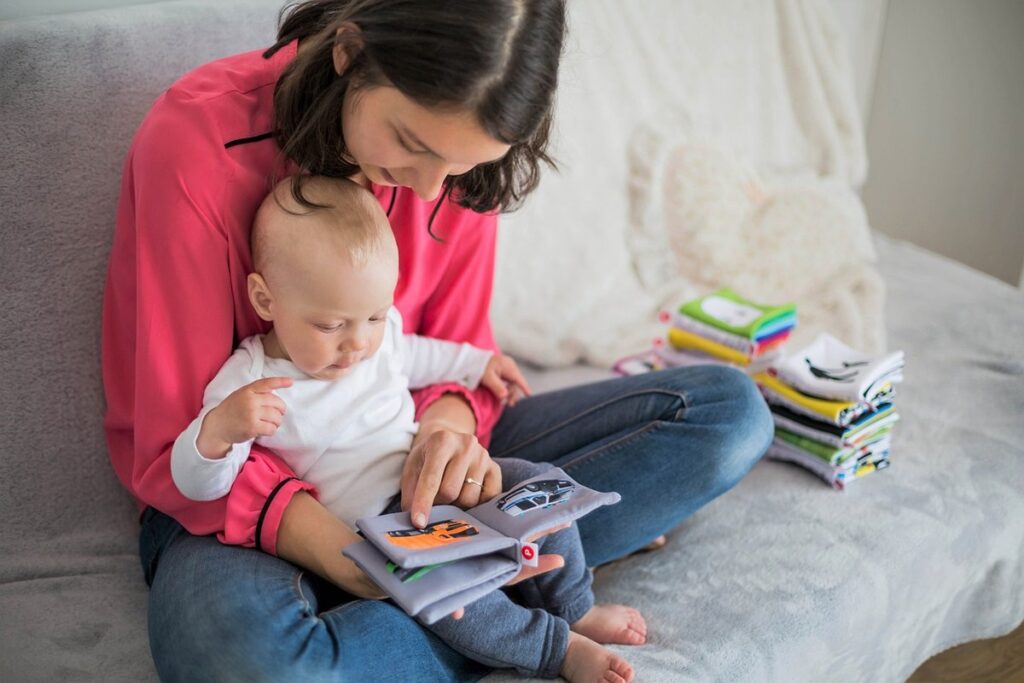
Why Start Early? Understanding the Importance of Reading to Babies
Reading to your baby from a young age may seem insignificant, but research shows it lays the foundation for a lifelong love of learning and sets them up for academic success. It’s never too early to start!
The Science Behind Language Development and Brain Growth
Language development is a remarkable process that occurs rapidly in the first few years of life. Research suggests that babies as young as six months old are capable of learning and processing new information at an incredible rate. This critical period for language development, also known as the “sensitive period,” is influenced by various factors, including exposure to spoken language.
Reading aloud to your baby exposes them to phonological awareness, which is essential for language development. Phonological awareness refers to the ability to recognize and manipulate individual sounds within words. For example, when you read “cat” and “hat”, your baby begins to develop an understanding of how sounds can change to create new words.
When reading together, you’re also introducing your baby to a vast vocabulary and syntax. Syntax refers to the rules governing sentence structure. By exposing your baby to a variety of sentences and sentence types, you’re helping them develop an intuitive sense of language.
Setting Up a Reading Routine from Birth
Establishing a daily reading habit from infancy is one of the most effective ways to foster a lifelong love for reading in your child. From birth, babies are naturally drawn to sounds and rhythms, making them perfect candidates for early literacy development. In fact, studies have shown that children who are exposed to regular storytime sessions before age two exhibit improved language skills, memory, and cognitive abilities.
To create a cozy reading environment, start by choosing a comfortable spot in your home where you can sit together with your baby. Make sure it’s quiet, dimly lit, and free from distractions. For the first few months, use board books or cloth books with simple textures and colors to capture your baby’s attention. As they grow older, introduce more complex stories and illustrations.
Set aside a specific time each day for reading – ideally before bedtime when your baby is most relaxed. Start with short sessions (5-10 minutes) and gradually increase the duration as they become more engaged. To make it a special bonding experience, hold your baby close, point to pictures, and use different tones of voice to convey emotions. By doing so, you’ll be laying the foundation for a lifelong love affair with reading that will enrich their cognitive, emotional, and social development.
Building Vocabulary and Imagination Through Stories
Reading stories aloud exposes babies to a world of new words, helping them build their vocabulary and spark their imagination from an incredibly early age. This sparks creativity and lays the foundation for future learning.
How Books Expand a Baby’s Lexicon
When you read to your baby, you’re not just bonding over a good story – you’re also giving them an incredible gift: a vast and expanding vocabulary. Through the words and phrases they hear, babies start to grasp new concepts, language structures, and even nuances of meaning.
As research shows, babies as young as six months old are capable of learning and retaining new words at an astonishing rate (1). In fact, studies have found that children who are exposed to a rich vocabulary from birth go on to perform better in reading comprehension and writing tasks by the time they’re five years old (2).
So, how can you harness this power for your little one? Try incorporating diverse books into your daily routine – explore fiction and nonfiction texts, poetry, and even music. As you read together, pause occasionally to point out new words, explain their meanings, and encourage your baby to repeat them.
Use these opportunities to model language structures too – like rhyming, alliteration, or onomatopoeia – which will help lay the groundwork for future literacy skills (3). By doing so, you’ll be giving your child a lifelong gift: the ability to communicate effectively, think creatively, and access the world of stories and ideas.
The Magic of Picture Books: Visual Storytelling
Picture books are more than just stories with pictures; they’re a powerful tool for sparking imagination and fostering empathy. The illustrations in these books have the ability to evoke strong emotions and create a connection between the reader and the story. When you read picture books to your baby, you’re not only exposing them to new vocabulary but also teaching them how to navigate complex emotions.
The magic of picture books lies in their ability to show, rather than tell. For example, instead of saying “the little rabbit was sad,” a picture book might depict the rabbit with tears streaming down its face and a droopy ear. This visual storytelling helps babies develop an understanding of emotional nuances and empathy for others. When you point out these illustrations and describe what’s happening in the story, your baby begins to make connections between emotions, actions, and consequences.
Try this: next time you’re reading a picture book together, ask your baby to point out the sad or happy character on the page. This simple exercise will help them develop their observational skills and emotional intelligence.
Enhancing Bonding and Attachment Through Reading Together
Reading together is a simple yet powerful way to strengthen your bond with your baby, fostering a lifelong love of learning and creating memories that will last. Let’s explore some practical tips on how to do it effectively.
Creating a Sense of Security through Co-Reading
When you read aloud to your baby, it’s not just about sharing a story – you’re also creating a sense of security and shared experience that can strengthen your bond. This co-reading experience is essential for infants, who are wired to respond to the sound of their caregivers’ voices.
As you read together, your baby begins to associate your voice with comfort, trust, and predictability. This familiarity helps them feel safe and secure, which in turn fosters a deeper connection between you and your child. For instance, when you pause to point out pictures or ask questions about the story, your baby starts to engage actively, sensing that they’re participating in this special experience.
To make co-reading even more effective, try to establish a consistent routine. Choose a few favorite books and read them regularly, using different voices for characters and infusing the storytelling with emotions. This predictability will help your child anticipate what’s coming next, making them feel more secure and engaged. By doing so, you’ll not only be nurturing their love for reading but also laying the groundwork for a lifelong bond that’s rooted in trust, security, and shared experiences.
The Benefits of Reading Together for Working Parents
As working parents, finding quality time with our little ones can be a daily challenge. Between juggling work schedules and family responsibilities, it’s easy to get caught up in the chaos of everyday life. However, making time for reading together is an investment that yields significant rewards.
Reading with your baby might seem like just another task to add to your already overflowing plate. But trust us, even a few minutes each day can make all the difference. For instance, setting aside 10-15 minutes before bed or during naptime can be a great way to unwind and bond with your child. Start with short sessions and gradually increase the duration as you both get into the habit.
The benefits of reading together are numerous for working parents. It’s an opportunity to relax, connect with your baby, and watch them grow cognitively, emotionally, and linguistically. You can choose books that align with their interests or introduce new ones to broaden their horizons. By doing so, you’ll not only be strengthening your relationship but also fostering a lifelong love of reading in your child.
Boosting Cognitive Development and Academic Success
When you read to your baby regularly, it not only sparks a lifelong love of learning but also lays the foundation for future academic success. This is where cognitive development comes in.
How Reading Affects Attention Span, Memory, and Problem-Solving Skills
Reading to your baby is not only an enjoyable activity, but it also plays a significant role in shaping their cognitive development. Research has shown that reading has a profound impact on attention span, memory, and problem-solving skills, which are essential for academic success.
When babies are exposed to books from an early age, they develop better concentration and attention span. As they grow older, this helps them stay focused during lessons and complete tasks more efficiently. For instance, studies have found that children who engage in regular reading activities exhibit improved cognitive abilities, including better memory and problem-solving skills. In fact, one study discovered that babies as young as 6 months old can differentiate between stories with a clear narrative and those without.
To reap the benefits of reading for your baby’s cognitive development, make it a daily habit to read together. Start with simple, colorful books and gradually move on to more complex ones. Encourage your child to participate by pointing to pictures and identifying objects. As they grow older, engage them in interactive activities like predicting what happens next or discussing the story’s plot. By doing so, you’ll not only be fostering a love for reading but also setting the foundation for their future academic success.
The Connection Between Reading and Future Education Outcomes
Reading to babies is not just about developing their language skills; it has a profound impact on their future educational achievements and career prospects. Research suggests that children who are exposed to reading from an early age tend to perform better academically than those who don’t receive the same level of exposure. A study by the National Literacy Trust found that 72% of young readers were more likely to achieve good grades in school, while only 44% of non-readers achieved similar results.
This is because reading lays the foundation for a lifelong love of learning. Children who develop a strong reading habit early on are more likely to stay motivated and engaged throughout their academic journey. They also tend to have better critical thinking skills, which enables them to analyze complex information and make informed decisions. As they grow older, these skills become essential for excelling in higher education and eventually, the workforce.
By starting early, parents can give their child a significant advantage in life. So, take some time each day to read with your baby, even if it’s just for 5-10 minutes. Choose books that are engaging and interactive, and don’t worry too much about the content – focus on enjoying the experience together!
Overcoming Challenges: Tips for Parents Who Struggle to Read Aloud
Not every parent finds reading aloud effortless, and that’s okay – we’ve got tips to help you overcome common challenges and develop a lifelong love of reading in your little one.
Strategies for Busy Parents or Those Who Struggle with Reading
Reading to babies is one of the most rewarding experiences for parents, but it can be challenging when you’re short on time or struggling with literacy. If you’re a busy parent or find reading aloud difficult, don’t worry – there are strategies that can help.
To make time for reading, start small: even 5-10 minutes a day is better than nothing. Try incorporating reading into your daily routine, such as right before bedtime or during naptime. You can also use this opportunity to bond with your baby while they’re still awake.
If you struggle with literacy, try audiobooks! Many libraries offer free access to digital audiobooks that can be played on devices like tablets or smartphones. This way, you can enjoy stories together without having to worry about reading aloud yourself.
Adapting reading routines to accommodate different learning styles is also key. Some babies love the tactile experience of turning pages, while others prefer the visual stimulation of a screen. Experiment with different formats and find what works best for your little one.
For example, you can use e-readers or tablets to display interactive stories, which can be especially engaging for curious babies.
The Role of Technology in Fostering a Love of Reading
Technology has revolutionized the way we consume books and stories, making it easier than ever to foster a love of reading in our little ones. E-books and audiobooks have opened up a world of possibilities for busy parents who want to read to their babies but struggle to find time. With e-readers like Amazon Kindle or apps like Epic!, you can access a vast library of digital books that are designed specifically for children.
Not only do e-books and audiobooks make reading more accessible, but they also offer interactive features that can enhance the reading experience. For example, some e-book apps allow parents to track their baby’s progress, set goals, and even earn rewards. This gamification element can be a great motivator for both parent and child.
In addition to e-books and audiobooks, there are many other digital resources available that can supplement traditional reading. Online platforms like Storytime and ABCmouse offer a variety of interactive stories, games, and activities that can help babies develop their language skills and love of reading. By incorporating these digital tools into your daily routine, you can create a more engaging and interactive reading experience for your baby.
Conclusion: Cultivating a Lifetime Love of Reading
As you continue on your journey to create a lifelong love of reading for your baby, let’s explore how to nurture and encourage their natural curiosity as they grow. This final chapter offers practical tips and encouragement to keep them engaged.
Recap of Key Takeaways and Benefits for Babies
In conclusion, we’ve explored the incredible impact that reading to babies can have on their cognitive, emotional, and social development. By making reading a regular part of their daily routine, you’re not only creating a lifelong love for books but also setting them up for future success.
Some key takeaways from this journey are:
* Reading to your baby exposes them to a world of new vocabulary, concepts, and ideas that shape their understanding of the world.
* It fosters a strong bond between you and your child, promoting attachment and emotional intelligence.
* Regular reading sessions can even improve your baby’s language skills and prepare them for kindergarten.
The benefits don’t stop there. As your child grows, they’ll be more likely to develop a love for learning, achieve higher academic performance, and become more empathetic individuals. They’ll also have better communication skills, which will serve them well in personal and professional relationships.
To make the most of this powerful tool, remember to start early and make it fun! Read with enthusiasm, ask questions, and engage in discussions about the stories you read together.
Encouraging a Lifelong Passion for Reading
As you continue to nurture your baby’s love for reading, it’s essential to encourage this passion throughout their childhood and beyond. Creating a lifelong bookworm can be achieved by instilling a sense of wonder and exploration around stories.
To find engaging stories, browse through award-winning children’s books, which are often recognized for their captivating plots and relatable characters. You can also explore various genres, such as picture books, early readers, and chapter books, to cater to your child’s evolving interests. Make reading a family affair by sharing favorite tales aloud or having each member read independently.
A well-curated home library is vital in fostering a love for reading. Start with a modest collection of board books and cloth books, gradually expanding to picture books as your baby grows. Encourage your child to participate in selecting new titles and arranging their bookshelves by color, author, or theme. This not only develops an appreciation for organization but also instills a sense of ownership and responsibility.
As your child matures, promote literacy beyond early childhood by incorporating activities that blur the line between play and learning. You can engage them in storytelling through puppetry, role-playing, or even creating their own comics. These interactive experiences will not only keep reading exciting but also develop essential language skills and a deeper understanding of narrative structures.
Frequently Asked Questions
How often should I read to my baby for maximum language development benefits?
Read to your baby at least twice a day, ideally once in the morning and once before bedtime. This frequency will help solidify new words and concepts in their developing brain.
What if I struggle with reading aloud due to personal issues or anxiety? Can someone else take over?
Yes, you can involve other caregivers, such as grandparents or siblings, to read to your baby. This shared responsibility can make it more manageable for everyone involved and help create a love of reading in multiple generations.
Are e-books suitable alternatives to physical picture books when introducing reading to babies?
While e-books can be convenient, research suggests that physical books offer more benefits for language development and cognitive growth. Try combining both formats to see what works best for your baby’s unique learning style.
How can I adapt my reading routine to accommodate a baby with special needs or developmental delays?
Every baby is different, so it’s essential to tailor your approach to their individual needs. Consult with healthcare professionals or early intervention specialists for guidance on adapting your reading routine and selecting books that cater to their abilities and interests.
Can I still benefit from reading to my toddler if we’re not using a formal language program?
Yes! Reading to your child in any language, even if it’s not a formal language education, will significantly enhance their cognitive development, attention span, and social skills. Continue to read together with enthusiasm and engage in conversations that encourage learning.